
Buy Now, Pay Later Added a Third Party to Every Dispute
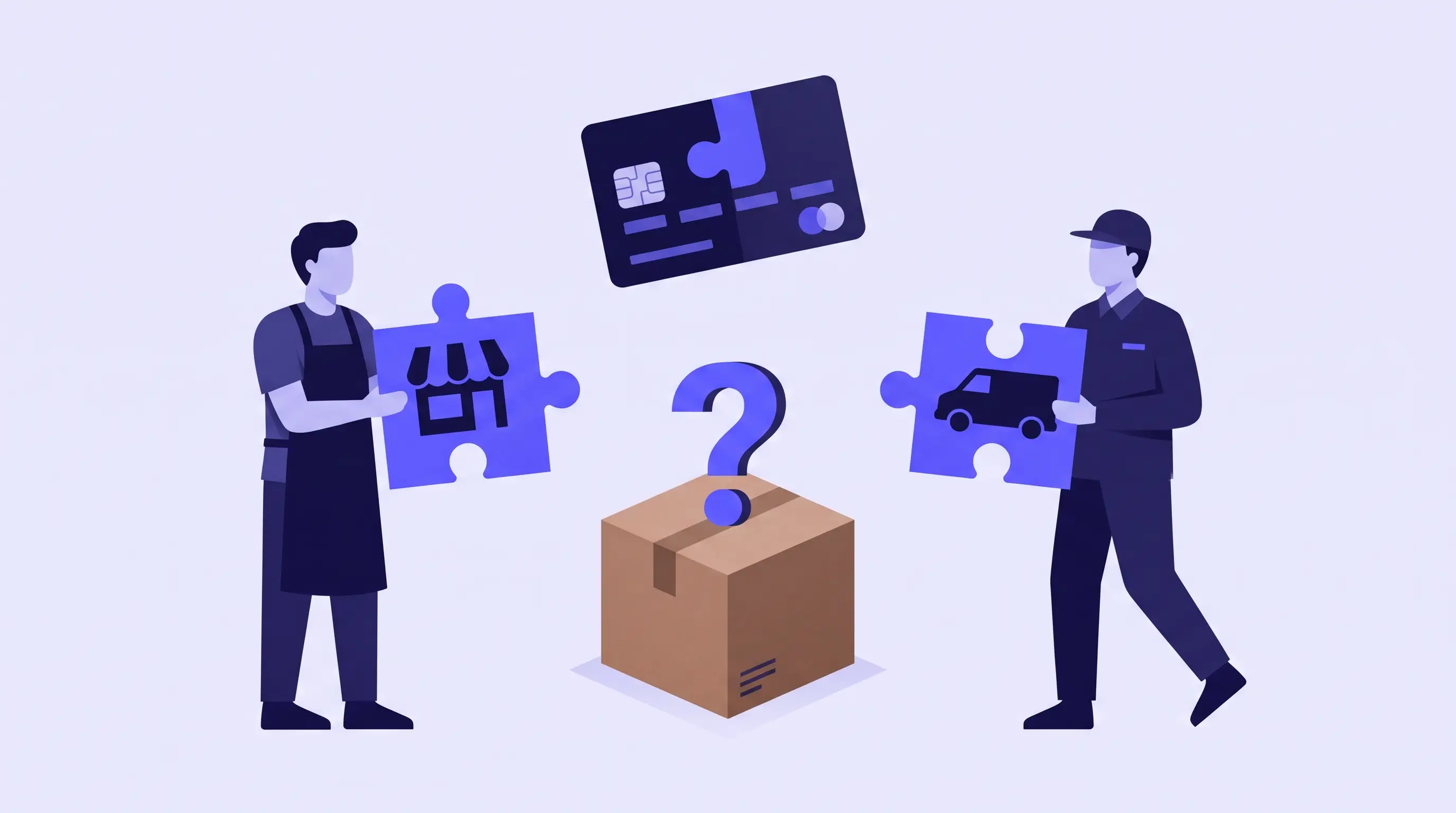
Buy Now, Pay Later solved a real problem at the checkout: it made buying frictionless. But it did something quieter to everything that happens after the sale. It inserted a third party, a lender, between the customer and the retailer, and in doing so it split every future dispute into pieces that no one holds all of.
You can see the strain in the complaints. Refund-related issues are the single biggest source of complaints about major BNPL providers, accounting for almost a quarter of all cases, according to Resolver. The most common story is mundane and maddening: a customer returns an item, and the instalments keep coming out anyway.
What Did BNPL Actually Change About Disputes?
It turned one relationship into two. A normal purchase is a single thread between customer and retailer. A BNPL purchase is two separate agreements: the purchase with the retailer, and a payment plan with the BNPL provider. A refund now has to travel between those two parties to fully resolve, and if it does not complete the trip, the customer has returned the goods but is still paying for them.
That is why refunds dominate BNPL complaints. It is not usually malice; it is a chain with too many links. But the same fragmentation that causes an honest refund to stall is what a dishonest claim exploits. When responsibility is split and no one holds the full picture, both accidents and abuse slip through the cracks in exactly the same way.
Why Do BNPL Refunds Fall Out of Sync?
Because the refund has to survive a relay across several hands. Resolver lays out where it breaks: the retailer has to log the return, the warehouse has to inspect the item, the retailer has to communicate the refund to the BNPL provider, and the provider has to update the payment schedule. Any one of those steps stalling leaves the customer still being charged for something they sent back.
Each handoff is a place where information is lost or delayed, and each is owned by a different party with its own systems and priorities. The retailer thinks it has processed the return. The provider has not heard. The customer is caught in between, watching instalments leave their account. Nobody in the chain is necessarily doing anything wrong, and yet the outcome is broken, because no single party can see the whole transaction from purchase to refund.
Who Is Liable When a BNPL Dispute Is Fraudulent?
Often the retailer, and that surprises people. BNPL providers run their own internal dispute processes rather than going through the card networks, because the provider has paid the merchant and is now the buyer's lender. Providers absorb some categories of fraud, such as identity theft, but when a dispute is about delivery, product quality or merchant error, the merchant frequently remains on the hook.
So the liability map is murky by design. The provider owns the customer relationship and the dispute process, but the retailer often owns the loss, and neither has the complete evidence. A false "item not received" claim lands in a system where the party best placed to judge it, the retailer who shipped it, may not be the party running the dispute, and the party running the dispute cannot see what happened at the doorstep. Confusion like that is a gift to a fraudster.
Why Does Fragmentation Help the Fraudster?
Because a false claim only has to survive the gaps between parties, not any single party's scrutiny. In a BNPL transaction, the knowledge is scattered: the retailer knows what was shipped, the carrier knows what was delivered, and the provider knows the payment plan and runs the dispute. No one holds all three.
A fraudster works precisely in those seams. They can claim non-delivery to a provider that cannot see the carrier's proof, or exploit a refund that the retailer logged but the provider never received. Every handoff between parties is a place where a story can be told that no single party is positioned to disprove. The more parties a transaction passes through without a shared view, the more seams there are, and the easier the false claim becomes.
What Does Each Party Actually See?
Laid out plainly, the gap is obvious:
| Question | Retailer | Carrier | BNPL provider |
|---|---|---|---|
| What was ordered and shipped? | Yes | No | Partial |
| What happened at delivery? | No | Yes | No |
| The payment plan and dispute? | No | No | Yes |
| The claimant's history elsewhere? | No | No | No |
Read down the last column and the problem is stark: not one of the three can answer every question, and none of them can see how the claimant behaves at other retailers. Each party is confident about its own square and blind to the rest, which is precisely the condition a false claim needs.
What Would Close the Gaps?
A shared view across the parties, so the transaction is legible end to end instead of in disconnected fragments. When the retailer, the carrier and the provider can see what actually happened to an order, and when a claimant's behaviour is visible across retailers rather than one, the seams a fraudster relies on close up. The honest customer's refund syncs because the parties are aligned; the false claim fails because there is nowhere left to hide it.
This is the same shape as the wider problem we keep coming back to. The retailer cannot see what the carrier knows, as we covered in The Carrier Knows What Happened to Your Parcel, and no single business can see a claimant's cross-retailer pattern, as in The Serial Returner No Single Shop Can See. BNPL just adds one more party to the same underlying gap, and the answer is the same: a shared view turns guesswork into a decision, which is what we build for in Fewer False Positives, Faster Claims.
More Parties, More Seams
BNPL is not the villain here. It genuinely improved the checkout, and most of its refund problems are honest breakdowns, not fraud. But every party you add to a transaction without a shared view adds another seam, and refund fraud lives in seams.
The lesson generalises beyond BNPL. As payments get more layered and more parties touch each order, the fragmentation grows, and so does the space for a false claim no single party can disprove. The fix is not fewer parties. It is a shared picture, so that adding a lender, or a carrier, or anyone else, stops meaning adding another place for fraud to hide.
Frequently asked questions
What is BNPL fraud?
BNPL fraud is abuse of Buy Now, Pay Later systems, including account takeover, fake accounts made with stolen credentials, and first-party abuse such as false item-not-received or refund claims. Because BNPL adds a lender between buyer and retailer, disputes and refunds run through a more complex chain.
Why do BNPL refunds get delayed after a return?
Because the refund has to pass along a chain. The retailer must log the return, the warehouse must inspect it, the retailer must tell the BNPL provider, and the provider must update the payment plan. If any link stalls, the customer keeps being charged instalments despite having returned the item.
Who is liable for a fraudulent BNPL dispute?
It depends on the dispute. BNPL providers run their own dispute processes rather than the card networks, and absorb some fraud such as identity theft, but for delivery, product-quality or merchant-error claims the retailer often remains liable. The split responsibility is part of why abuse is hard to pin down.
How can BNPL providers and retailers reduce refund fraud?
By closing the visibility gap between them, and seeing claimant behaviour across retailers rather than one. When the retailer, carrier and provider share a view of what actually happened and how a claimant behaves elsewhere, a false claim in the seams between them has nowhere left to hide.
Retail Cache · Fraud Intelligence
Retail Cache builds the shared fraud-intelligence network for retailers, carriers and 3PLs. We write about first-party, refund and delivery fraud, and how the industry can stop treating it as a cost of doing business.
Want to turn the tide on fraud, together?
See how Retail Cache helps retailers and carriers detect, prevent and stop fraud in real time.