
Bracketing Is the Returns Habit Retailers Trained Customers to Have
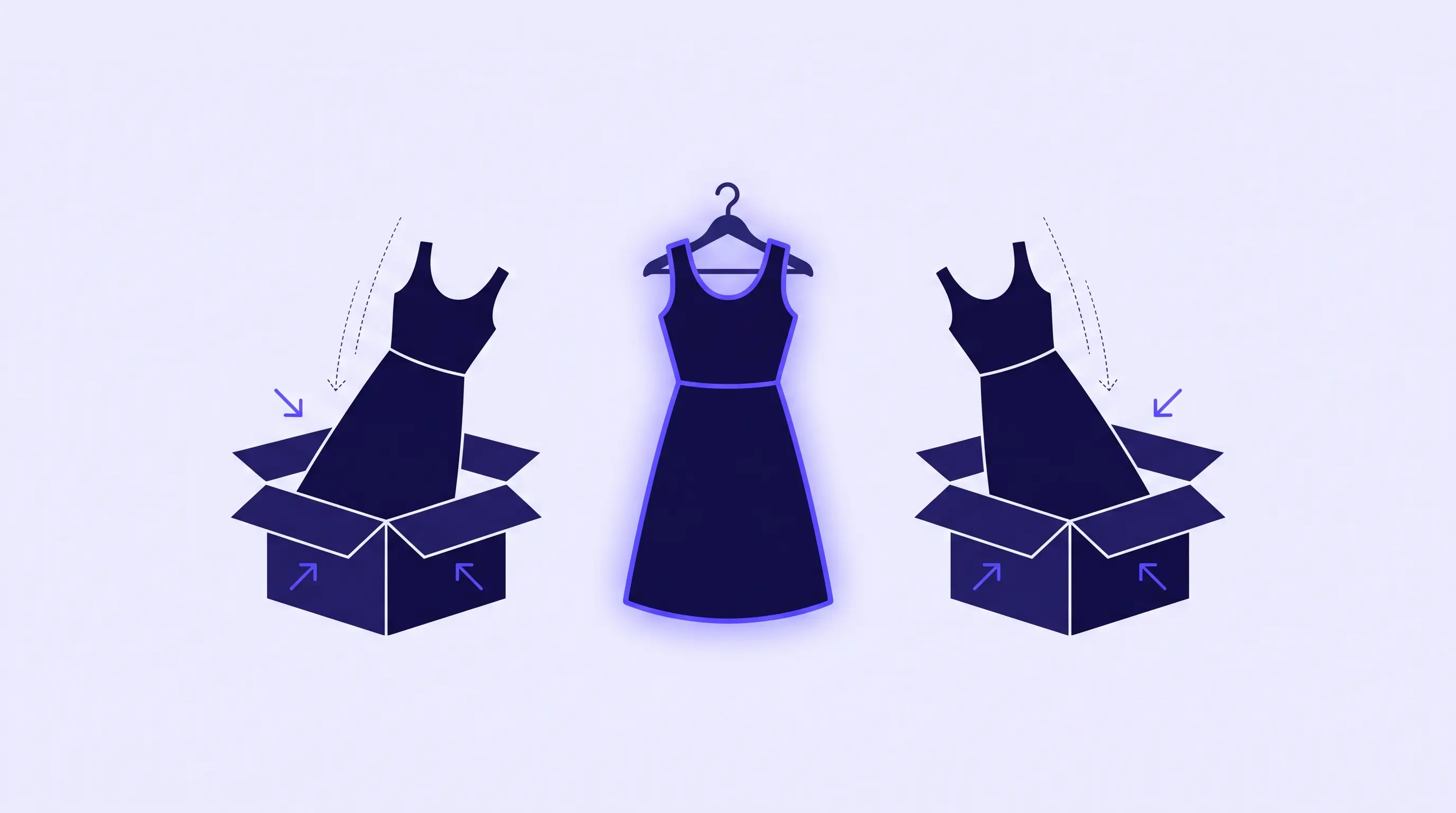
Somewhere right now, a shopper is ordering the same dress in three sizes, planning to keep one and send two back. They do not think of it as anything but sensible, and they are mostly right. This is bracketing, and it has become one of the most normal things in online retail, because retailers spent a decade teaching customers to do it.
The scale is remarkable. 43% of UK shoppers bracket, rising to 69% of Gen Z who admit to over-ordering on sizes and colours, according to Zigzag Global. It is now one of the fastest-growing reasons items get returned at all. And unlike most returns problems, retailers cannot really blame the customer, because the customer is doing exactly what the returns policy invited.
What Is Bracketing?
Bracketing is buying multiple sizes or colours of the same item with the intention of returning the ones you do not keep. It is a rational answer to a real problem: online, you cannot try anything on, so you order the size you think you are and the ones on either side, and let the returns process sort it out.
At 43% of UK shoppers and 69% of Gen Z, it is not a fringe behaviour or a scam. It is how a large share of people now shop for clothes and shoes, where somewhere between 40% and 60% of online footwear buyers bracket. That ubiquity is the first half of the problem. The second half is the cost.
Why Do Retailers Have Themselves to Blame?
Because they built the incentives that make bracketing the obviously smart move. Free shipping and free returns were introduced to win customers, and they worked, but they also removed every downside to over-ordering. When sending two of three items back costs the shopper nothing, ordering three is simply the rational choice. Retailers did not just tolerate bracketing; they engineered the conditions for it.
And they cannot easily walk it back. Roughly two-thirds of shoppers say they will not buy again from a brand that charges for returns. The free-returns promise has become table stakes, so the lever that would most directly reduce bracketing is also the one most likely to send customers to a competitor. Retailers taught a generation that returns are free and consequence-free, and that lesson does not un-teach cleanly.
Why Can't You Just Stop It?
Because the same behaviour is both the cost and the customer experience people now expect. Every bracketed order is real revenue at the checkout and a near-certain partial return afterwards, and each of those returns costs an estimated $10 to $30 in shipping, handling and restocking. In fashion, where roughly one in three online purchases comes back, bracketing quietly drives a large share of that volume and its cost.
So retailers are caught between two bad options. Clamp down with fees or tighter policies, and you tax the honest majority and lose customers who consider free returns non-negotiable. Do nothing, and the returns bill keeps climbing. Neither works, because both treat bracketing as one uniform thing to be either allowed or blocked, when the real issue is that it is not uniform at all.
Where Does Bracketing End and Abuse Begin?
This is the question that actually matters, and it has no answer at the return desk. A shopper who orders three sizes of one dress twice a year is a normal, valuable customer. A shopper who systematically over-orders dozens of items every week, wears some, and returns almost everything is abusing the policy. At the moment either of them sends a parcel back, the two look exactly the same.
That is what makes bracketing so much harder than obvious fraud. There is no empty box, no swapped product, no faked receipt to catch. The item comes back genuinely unworn, inside the return window, following the policy to the letter, just as we found with wardrobing in Wardrobing Is Mainstream. The abuse, when it exists, is not in any single return. It is in the volume and the pattern, and the return desk sees neither.
A Reasonable Bracketer vs an Abuser
Put them side by side at the point of return and the columns are identical:
| At a single return | Reasonable bracketer | Serial abuser |
|---|---|---|
| Item unworn? | Yes | Yes |
| Within the window? | Yes | Yes |
| Follows the policy? | Yes | Yes |
| Looks legitimate? | Yes | Yes |
| Distinguishable here? | No | No |
Every row matches, which is why inspecting the return harder achieves nothing. The signal that separates the two does not live in the parcel or the policy compliance. It lives in the history: how often, how much, and, tellingly, whether the same behaviour shows up across many retailers at once.
What Actually Separates Them?
Behaviour over time, and across retailers. The occasional bracketer and the serial over-orderer diverge completely once you stop looking at a single order and start looking at a pattern. One brackets sometimes and keeps a fair share; the other treats their wardrobe as a rolling free rental and returns almost everything, often spreading it across retailers so no single one sees the full extent.
No individual retailer can see that full picture on its own, which is the recurring blind spot behind almost every returns problem, described in The Serial Returner No Single Shop Can See. But seeing it is what lets a retailer do the thing the blunt options cannot: leave the honest bracketer completely alone while recognising the genuine abuser. That is the outcome we build toward in Fewer False Positives, Faster Claims, and it is the only response to bracketing that does not punish the customers you want to keep.
You Can't Un-Invite Bracketing
Bracketing is not going away, and trying to abolish it means abolishing the free-returns promise that a generation of shoppers now treats as non-negotiable. The behaviour is baked in, mostly legitimate, and genuinely useful to customers who cannot try before they buy.
The task, then, is not to stop bracketing. It is to stop pretending every bracket is the same. Somewhere in that 43% is a small number of people abusing the policy at a scale that matters, and they are invisible precisely because they hide among the honest majority doing the exact same thing. You cannot tax your way to telling them apart, and you cannot inspect your way there either. You can only see it in the pattern.
Frequently asked questions
What is bracketing?
Bracketing is ordering multiple sizes or colours of the same item intending to keep one and return the rest. It is now mainstream: 43% of UK shoppers do it and 69% of Gen Z admit to over-ordering (Zigzag Global), and it is one of the fastest-growing drivers of return volume.
Is bracketing fraud?
Mostly no. Bracketing is a rational response to sizing uncertainty and free returns, and most brackets are honest. That is exactly what makes it hard: legitimate bracketing and deliberate abuse, like wardrobing or serial over-ordering, look identical at the point of return.
Why can't retailers just stop bracketing?
Because they encouraged it and customers now expect it. Free shipping and free returns made bracketing feel low-risk, and roughly two-thirds of shoppers say they won't buy again from a brand that charges for returns. Banning it risks losing the good customers along with the cost.
How do retailers manage bracketing without punishing good customers?
By looking at behaviour over time rather than the single order. A shopper who occasionally brackets is nothing like one who systematically over-orders and returns across many retailers. Telling them apart needs the pattern, not the individual return, so honest bracketers are left alone.
Retail Cache · Fraud Intelligence
Retail Cache builds the shared fraud-intelligence network for retailers, carriers and 3PLs. We write about first-party, refund and delivery fraud, and how the industry can stop treating it as a cost of doing business.
Want to turn the tide on fraud, together?
See how Retail Cache helps retailers and carriers detect, prevent and stop fraud in real time.