
On a Marketplace, the Buyer's Fraud Lands on the Seller
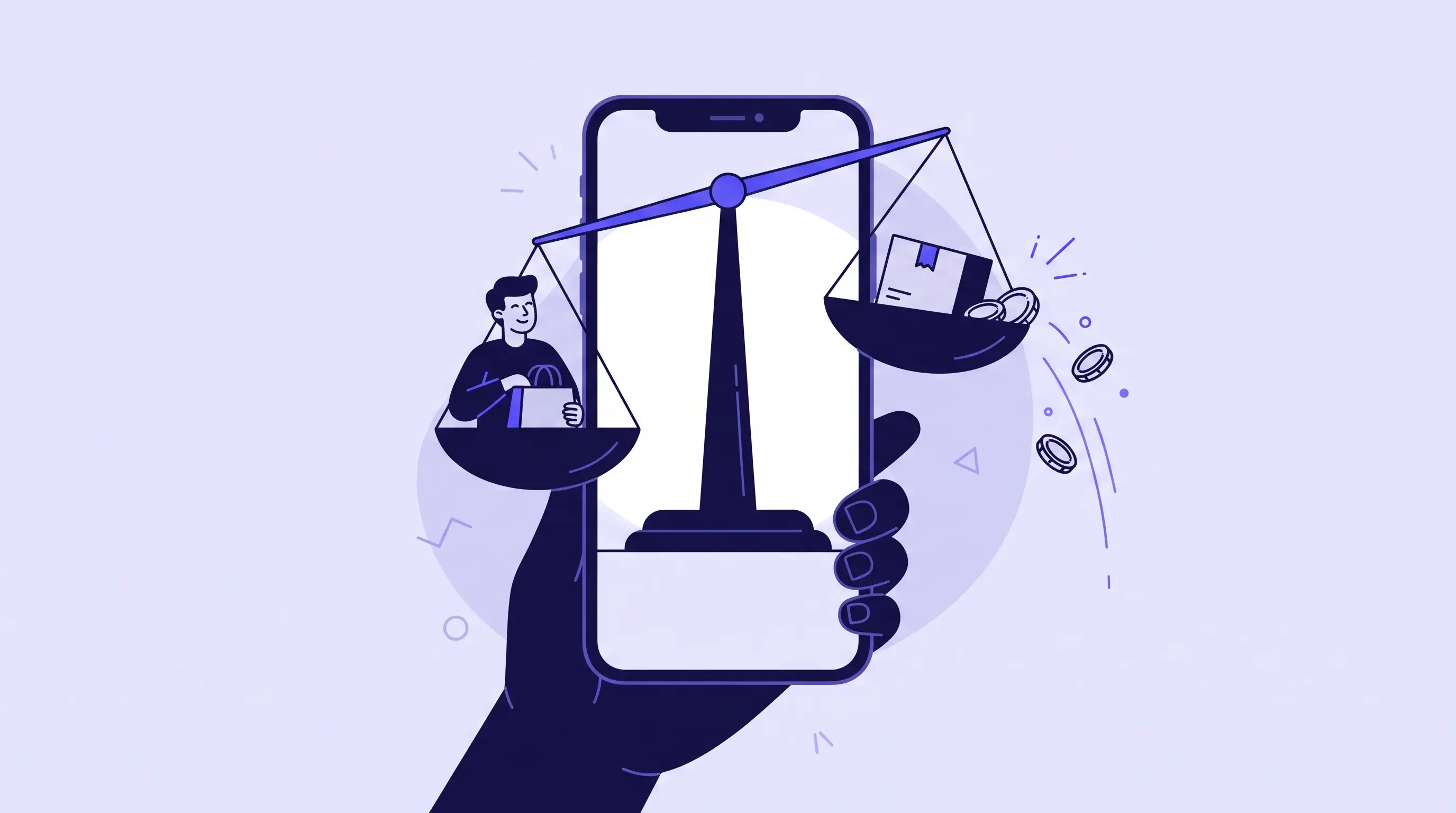
A buyer orders a jacket on a resale marketplace, receives it in perfect condition, then opens an AI tool, adds a convincing tear to a photo of it, and sends that to support as proof of damage. The refund comes through. The jacket stays in their wardrobe. And the person who actually loses out is not the platform. It is the seller.
That is the part of marketplace fraud that gets missed. On a two-sided platform, a buyer's fraud does not land on some faceless corporate balance sheet. It lands on another user, the seller, who shipped a real item in good faith and is now out both the item and the money. Understanding who pays is the key to understanding why this problem is so corrosive.
Who Actually Pays for Buyer Fraud on a Marketplace?
The seller, in most cases. Marketplaces run buyer-protection programmes designed to keep buyers confident enough to keep spending, and those programmes tend to resolve disputes in the buyer's favour. So when a buyer claims an item arrived damaged or never arrived and the claim is upheld, the platform refunds the buyer, and the seller absorbs the loss of the goods and the sale.
This is not an accident or an oversight. It is the deliberate logic of a two-sided platform, where buyer trust is the growth engine. The trouble is that the same logic that reassures honest buyers also shields dishonest ones, and it routes the cost of their fraud straight to the seller, who had no part in the deception and little power to contest it.
Why Do Marketplaces Side With the Buyer?
Because buyers are the demand that makes the whole thing work. A marketplace lives or dies on buyer confidence: if buyers fear being scammed, they stop spending, and the sellers leave with them. So platforms lean protective toward buyers by design, offering money-back guarantees and fast refunds to keep that side of the market comfortable.
It is a rational strategy that carries a hidden cost. Tilting every dispute toward the buyer keeps buyers happy in the short term, but it quietly taxes the sellers, who are the supply the platform equally depends on. The platform optimises for one side of its own market and lets the other side carry the fraud, which works right up until the sellers notice.
How Is AI Making Marketplace Fraud Worse?
By making the fake evidence indistinguishable from the real thing. Reporting on resale platforms describes buyers using AI tools to add "cracks, scratches or other defects" to photos of items that arrived perfectly intact, then submitting them as damage claims. The realism has crossed a line: as one investigation put it, generative tools have reached a level where it is difficult to tell a genuine defect from an artificial one, "both for automated systems and for human operators."
That breaks the marketplace's usual referee. Dispute resolution has always leaned on evidence, a photo of the damage, a description of the fault. Once that photo can be fabricated on demand and neither software nor a human reviewer can reliably catch it, the evidence stops settling anything. The claim looks perfect, the platform defaults to the buyer, and the seller pays. We wrote about how AI has broken evidence-based fraud checks more broadly in AI Can Fake the Evidence Now.
Why Can't an Individual Seller Fight It?
Because a single seller only ever sees a single dispute. To the seller on the receiving end, a fabricated damage claim looks like one unlucky transaction with one unhappy buyer. They have no way of knowing that the same buyer ran the same claim against a dozen other sellers last month. From where they stand, there is no pattern, just bad luck and a lost jacket.
Sellers sense this, even when they cannot prove it. Consumer groups collecting seller reports have noted sellers flagging "suspicious disputes" and repeat behaviour patterns. The instinct is right, but the evidence is out of reach, because the proof of a serial buyer-fraudster does not live in any one seller's account. It lives across all the sellers they have hit, and no single seller can see that far.
What One Seller Sees vs What the Network Sees
The gap between the two is the whole problem:
| One seller | Across many sellers | |
|---|---|---|
| A damage claim | An unlucky one-off | One of many by the same buyer |
| The AI-faked photo | Convincing, unbeatable | Convincing, but the pattern is not |
| The buyer | A stranger with a complaint | A repeat claimant |
| Can abuse be proven? | Rarely | Clearly |
Each individual claim is designed to be unwinnable in isolation. The buyer controls the evidence and the platform defaults their way. But the one thing the buyer does not control is what every other seller has experienced, and that shared history is where a serial abuser stops being invisible. It is the same cross-network blind spot we described for retailers in The Serial Returner No Single Shop Can See.
What Protects the Seller, and the Platform?
Seeing buyer behaviour across sellers rather than inside a single dispute. When a marketplace can recognise that a particular buyer runs the same claim against seller after seller, the fabricated photo stops being the deciding factor. The genuine buyer with a real broken item looks nothing like the account systematically working the guarantee, whatever their evidence shows.
That protects both sides at once. Honest buyers keep the fast, confident refunds that make them trust the platform. Honest sellers stop being quietly taxed for frauds they cannot see or contest. And the platform protects the thing it actually runs on, which is not any single transaction but the confidence of everyone in the market. We describe what deciding on the claimant rather than the claim changes in Fewer False Positives, Faster Claims.
Trust Is the Platform's Real Inventory
A marketplace does not really sell jackets. It sells the confidence that lets strangers transact, and that confidence is, as one report on Vinted put it, "the true capital of a peer-to-peer buying and selling platform." Buyer fraud that quietly bankrupts the sellers is not a customer-service problem. It is an attack on that capital.
Protecting buyers while letting sellers absorb the fraud looks like it keeps the market healthy, and for a while it does. But sellers who keep losing to claims they cannot fight eventually leave, and a marketplace with no trusted sellers has nothing to sell. The buyer's fraud lands on the seller first. It reaches the platform in the end.
Frequently asked questions
What is marketplace fraud?
Marketplace fraud is abuse on a two-sided platform where buyers and sellers transact. It includes buyers falsely claiming an item never arrived or arrived damaged to win a refund, and sellers misrepresenting goods. On resale platforms, buyer-side refund fraud is a fast-growing form.
Who pays when a marketplace buyer commits refund fraud?
Usually the seller. Marketplaces run buyer-protection programmes that tend to resolve disputes in the buyer's favour to keep buyers confident, so when a claim is upheld the seller loses both the item and the payment, while the platform preserves the buyer relationship.
Why is AI making marketplace fraud harder to catch?
Because buyers can now use AI to add convincing cracks, scratches or defects to photos of items that arrived intact. Reporting notes these fakes are realistic enough that both automated systems and human reviewers struggle to tell a genuine defect from an artificial one.
How can marketplaces protect sellers from buyer fraud?
By recognising repeat buyer behaviour across sellers, not just within one dispute. A single seller cannot prove a pattern, but the same buyer running the same claim against many sellers forms one, and seeing that shared pattern is what separates a genuine complaint from serial abuse.
Retail Cache · Fraud Intelligence
Retail Cache builds the shared fraud-intelligence network for retailers, carriers and 3PLs. We write about first-party, refund and delivery fraud, and how the industry can stop treating it as a cost of doing business.
Want to turn the tide on fraud, together?
See how Retail Cache helps retailers and carriers detect, prevent and stop fraud in real time.